
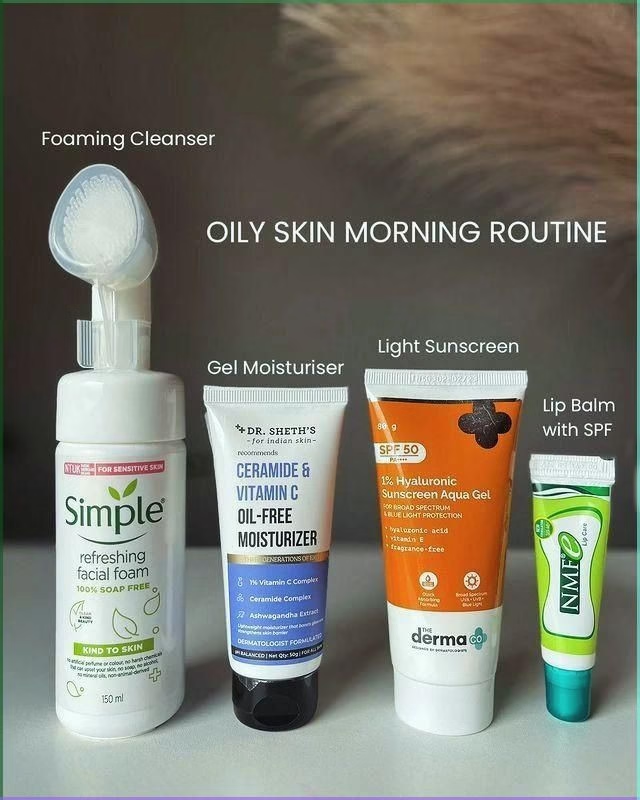
If you've ever bought five skincare products and had no idea which one goes first — you are not alone. Most of us in India grew up with a bar of soap and coconut oil, and suddenly we're staring at serums, toners, and SPF like it's a chemistry exam This guide is for you. No jargon. No complicated steps. Just a clear, honest answer to the question: how do you actually layer skincare products when you have oily skin in India?
By the end of this post, you'll know the exact order to apply every product — morning and night — plus which ingredients to use, which to avoid, and why the sequence actually matters for your skin.
Table of Contents
- Why does product layering order matter?
- Understanding oily skin in the Indian climate
- Morning skincare routine — step by step
- Night skincare routine — step by step
- Best ingredients for oily skin in India
- Ingredients to avoid
- Common myths about oily skin — busted
- Frequently asked questions (FAQs)
- Quick reference table
Why Does Product Layering Order Matter?
Here's the simple truth: skincare products are formulated to absorb in a specific way. If you apply a thick moisturiser before a water-based serum, the moisturiser creates a physical barrier — and your serum just sits on top, completely blocked. You've spent money on something that never even reached your skin.
The golden rule of skincare layering is: thinnest to thickest. You always start with the most watery, lightweight product and finish with the heaviest. For oily skin in India — where humidity is already high and your skin produces extra sebum — this order becomes even more important. The wrong layering can make you look greasy within an hour.
Pro Tip: A simple way to remember the order — if a product feels like water, it goes first. If it feels like a cream or oil, it goes last. Sunscreen is always the absolute final step in your morning routine, no exceptions.
Understanding Oily Skin in the Indian Climate
Indian skin tends to be on the oilier side naturally — and for good reason. Our skin evolved in a tropical climate, and sebum production is your skin's way of protecting itself from the environment. Add humidity ranging from 60–90% in cities like Mumbai, Chennai, Bengaluru, and Kolkata, and you're dealing with a very specific challenge that a Korean or American skincare routine simply may not account for.
Common signs you have oily skin:
- Your T-zone (forehead, nose, chin) looks shiny within 2 hours of washing your face
- Your makeup doesn't stay in place and slides off by afternoon
- You deal with blackheads, whiteheads, and enlarged pores
- Your skin feels heavy or "thick" by noon
- You frequently get pimples around the forehead and chin
The biggest mistake people with oily skin make in India? Skipping moisturiser. When you strip your skin of moisture — whether from over-washing or using harsh products — your sebaceous glands go into overdrive and produce even more oil to compensate. The solution is not less moisture, but the right kind of moisture.
Important: Do not wash your face more than twice a day. Over-washing strips natural oils and actually triggers more oil production in response. Stick to twice — morning and night.
Morning Skincare Routine for Oily Skin — Step by Step
Here is the exact order to follow every single morning. Once you get used to it, each step takes under 60 seconds. The entire routine takes about 8–10 minutes including wait times.
Step 1: Cleanser (Face Wash)
Start with a gentle, sulfate-free foam or gel cleanser. For oily skin in India, look for active ingredients like salicylic acid (1–2%) or tea tree. Avoid harsh soap-based cleansers that leave your skin feeling "squeaky clean" — that squeaky feeling means your skin's natural moisture barrier has been damaged.
Affordable Indian options: Minimalist 2% Salicylic Cleanser, Cetaphil Oily Skin Cleanser, Plum Green Tea Pore Cleansing Face Wash, Mamaearth Tea Tree Face Wash.
Step 2: Toner (Optional but Helpful)
A toner preps your skin to absorb the next products better and can help balance your skin's pH after cleansing. For oily skin, use an alcohol-free toner containing niacinamide, witch hazel, or green tea extract.
Avoid toners with denatured alcohol — they create a temporary mattifying effect but damage your skin barrier over time, causing dehydration and eventually more oil production. Apply with your fingertips by patting gently (not a cotton pad, which wastes product). You can skip this step entirely if your skin is sensitive.
Step 3: Serum — Your Targeted Treatment
This is where the real work happens. Serums are highly concentrated and water-based, so they must go on before your moisturiser to penetrate properly.
Best serums for oily, acne-prone Indian skin:
- Niacinamide 10%: Reduces the appearance of pores, controls excess oil, and fades post-acne dark spots. An absolute must-have for Indian skin tones. Affordable picks: Minimalist Niacinamide 10%, The Ordinary Niacinamide.
- Vitamin C (10–15%): Addresses pigmentation and sun damage — extremely relevant in India given our UV levels. Use in the morning only. Picks: Minimalist Vitamin C, Dot & Key Vitamin C serum.
- Azelaic Acid 10%: Excellent for both acne and dark spots simultaneously. Less irritating than other actives, great for beginners.
Apply 2–3 drops and pat gently into skin. Wait 60–90 seconds before the next step to allow absorption.
Step 4: Moisturiser — Yes, Even for Oily Skin
This is the step most oily skin beginners skip — and it is a mistake. Your skin absolutely needs hydration. What it does not need is a heavy, occlusive cream designed for dry skin.
Use a water-based gel moisturiser or a lightweight lotion. Look for the words "oil-free," "non-comedogenic" (meaning it won't clog pores), and "gel" on the label. These hydrate your skin without adding grease.
Great options in India: Neutrogena Hydro Boost Water Gel, Dot & Key Water Drench Hyaluronic Gel, Simple Kind to Skin Hydrating Light Moisturiser, Fixderma Shadow SPF Moisturiser.
Apply a pea-sized amount and spread evenly across the face and neck.
Step 5: Sunscreen — The Most Important Step
In India, with a UV index regularly hitting 9–11 for most of the year, sunscreen is not optional. It is the single most important skincare product you can use — for preventing pigmentation, premature ageing, and long-term skin damage.
For oily skin, use a matte-finish SPF 50 PA+++ sunscreen. The PA+++ rating indicates strong UVA protection, which is what causes tanning and skin ageing. Wait 2–3 minutes after your moisturiser before applying SPF.
Best sunscreens for oily skin in India: Minimalist SPF 50 PA++++, Re'equil Oxybenzone & OMC Free Sunscreen SPF 50, Neutrogena Ultra Sheer Dry-Touch SPF 50+, Anua Heartleaf Airy Fit Sunscreen.
Use approximately half a teaspoon (roughly the size of two adult fingers laid flat) for face and neck. Most people massively under-apply sunscreen, which reduces the actual SPF protection you receive.
Morning Routine Summary: Cleanser → Toner (optional) → Serum → Moisturiser → Sunscreen. Five steps, ten minutes, done.
Night Skincare Routine for Oily Skin — Step by Step
Your night routine is where you repair and treat your skin. Since there is no UV exposure at night, you skip sunscreen. This is also when you can safely use active ingredients that cause photosensitivity during the day, like retinol and AHAs.
Step 1: Double Cleanse (If You Wore Sunscreen or Makeup)
This is the most important and most overlooked step for Indian skin. Sunscreen — especially modern Indian SPF formulations — does not come off with just a regular face wash. You need to dissolve it first.
Start with a micellar water or cleansing balm to dissolve sunscreen, pollution, and excess sebum. Then follow with your regular gel face wash. This two-step process is called double cleansing, and it is one of the single biggest reasons people with oily skin continue to get unexplained breakouts despite having a "good" skincare routine.
Micellar water options in India: Bioderma Sensibio H2O, Simple Micellar Cleansing Water, Garnier Micellar Cleansing Water Rose.
Step 2: Exfoliant — 2 to 3 Times Per Week Only
Chemical exfoliants dissolve the bonds between dead skin cells and unclog pores far more effectively than physical scrubs. Physical scrubs (walnut, apricot, sugar) can create micro-tears in skin and actually worsen acne — avoid them on the face.
- BHA — Salicylic Acid 2%: The best choice for oily, acne-prone skin. It is oil-soluble, meaning it can enter your pores and clean them from the inside. Use 2–3 times per week at night, after cleansing.
- AHA — Glycolic or Lactic Acid: Works on the skin surface to improve texture, brightness, and even skin tone. Use once or twice per week.
Do not use BHA and AHA on the same night. Apply after cleansing, wait 10–15 minutes to let it work, then continue with the rest of your routine. Start with just once a week and build up gradually as your skin adjusts.
Step 3: Treatment Serum (Actives)
At night you can use stronger, repair-focused actives that would cause sun sensitivity during the day.
Retinol (0.025%–0.1% for beginners) is considered the gold standard for acne treatment, anti-ageing, and improving skin texture. Start with the lowest concentration, use only twice a week initially, and try the "sandwich method" — apply moisturiser first, then retinol on top, then moisturiser again — to reduce the chance of irritation.
Other excellent night serums include niacinamide (can be used every night), peptides for skin repair, and bakuchiol as a gentler retinol alternative.
Important combination rule: Do not use Vitamin C and niacinamide in the same routine. Use Vitamin C in the morning, and niacinamide or retinol at night. Do not combine retinol with AHAs or BHAs in the same routine — this can cause severe irritation.
Step 4: Moisturiser
At night you can go slightly richer than daytime if needed, but for oily skin in India's humidity, the same lightweight gel moisturiser you use in the morning works perfectly well year-round.
If you are using retinol, apply your moisturiser both before and after retinol (the sandwich method) to buffer irritation, especially in the first few weeks.
Avoid coconut oil and heavy facial oils at night if you are acne-prone — these are highly comedogenic for many Indian skin types and will cause breakouts.
Night Routine Summary: Double cleanse → Exfoliant (2–3x per week) → Treatment serum → Moisturiser. On simple nights, just cleanse and moisturise — that is always better than skipping entirely.
Best Ingredients for Oily Skin in India
Understanding ingredients helps you choose products wisely and spend money on things that actually work for your skin type and climate.
| Ingredient | What it does | Best for | Use in |
|---|---|---|---|
| Niacinamide 5–10% | Controls oil production, minimises pores, fades dark spots, strengthens skin barrier | All oily skin types — especially Indian skin with post-acne pigmentation | AM or PM, daily |
| Salicylic Acid 1–2% | Unclogs pores, removes blackheads, fights acne-causing bacteria | Acne-prone skin, blackheads, congested pores | PM, 2–3x per week |
| Vitamin C (10–15%) | Brightens skin tone, fades sun damage and hyperpigmentation, antioxidant protection | Tanning, dark spots, uneven skin tone — very common concerns in India | AM only |
| Retinol (0.025–0.1%) | Speeds cell turnover, clears acne, reduces enlarged pores, anti-ageing | Acne, rough texture, early signs of ageing — best for 22+ beginners | PM, 1–2x per week |
| Hyaluronic Acid | Draws moisture into skin without adding oil or heaviness | Oily skin that also feels dehydrated, tight, or dull | AM or PM, daily |
| AHA (Glycolic / Lactic Acid) | Exfoliates skin surface, improves texture, adds glow | Uneven skin tone, rough texture, dullness | PM, 1–2x per week |
| Azelaic Acid 10% | Reduces acne inflammation and post-acne marks simultaneously | Acne-prone skin, beginners who want a gentler active | AM or PM, daily |
Ingredients to Avoid for Oily Skin in India
Not every popular or "natural" ingredient is right for oily Indian skin. Here are the ones to be careful with:
Coconut Oil on the Face
This is perhaps the most common skincare mistake in India. Coconut oil is highly comedogenic — meaning it clogs pores — for most people. It works wonderfully for hair, scalp, and body, but applying it to your face as a "natural moisturiser" frequently leads to persistent breakouts and clogged pores.
Heavy Shea Butter or Lanolin
These rich, thick emollients are excellent for people with very dry skin in cold climates. For oily skin in India's heat and humidity, they sit heavily on skin, trap heat, and block pores.
Alcohol-Based Toners and Products
Denatured alcohol (listed as "alcohol denat." on labels) gives a satisfying temporary mattifying effect, but it damages your skin's natural barrier with regular use, leading to dehydration and eventually more oil production — the exact opposite of what you want.
Synthetic Fragrance
Fragrance is one of the most common causes of skin irritation, redness, and unexpected breakouts — particularly in a hot and sweaty climate where products stay in contact with skin longer. Look for "fragrance-free" or "unscented" on labels, especially for moisturisers and sunscreens.
Mixing Too Many Actives at Once
Using Vitamin C + AHA + BHA + retinol all in one routine is a guaranteed way to irritate your skin. Introduce one new active ingredient at a time, wait at least one week to see how your skin responds, then add the next. Patience with actives is not optional — it's essential.
Common Myths About Oily Skin — Busted
Myth 1: Oily skin doesn't need moisturiser
Truth: Oily skin absolutely needs moisturiser. When you skip it or strip your skin with harsh cleansers, your skin overproduces oil to compensate for the lost moisture — making oiliness worse, not better. A lightweight, water-based, oil-free gel moisturiser provides the hydration your skin needs without adding shine or clogging pores.
Myth 2: Sunscreen makes oily skin worse and causes breakouts
Truth: The wrong sunscreen can do this, but modern Indian sunscreen formulations have dramatically improved. Products from Minimalist, Re'equil, and Anua are lightweight, non-greasy, matte-finish, and non-comedogenic. Skipping sunscreen in India's intense UV environment causes far more damage — pigmentation, premature ageing, and worsening of dark spots — than any temporary shine could justify.
Myth 3: Oily skin doesn't age as fast, so skincare isn't important when young
Truth: While oily skin does have a slight natural advantage in terms of wrinkle formation (sebum provides a degree of natural moisture), UV damage, pigmentation, and acne scarring are significant concerns in India from a young age. Starting a simple, consistent routine early prevents far more problems than trying to fix them later.
Myth 4: Expensive imported brands work better than Indian skincare brands
Truth: Indian skincare has gone through a major transformation in recent years. Brands like Minimalist, Dot & Key, Plum, Fixderma, and Re'equil are formulated specifically for Indian climate and skin concerns. They contain comparable active concentrations to international brands, are often significantly more affordable, and are available without international shipping wait times.
Myth 5: You need an elaborate 10-step routine for good skin
Truth: A simple, consistent 3–4 step routine done every single day beats a complicated 10-step routine done inconsistently. The most important factors are cleansing properly, moisturising, and wearing sunscreen daily. Everything else is supplementary.
Frequently Asked Questions (FAQs)
How long should I wait between applying each skincare product?
For water-based products like toner and serum, 30–60 seconds is sufficient. For chemical exfoliants like salicylic acid or glycolic acid, wait 10–15 minutes before continuing. Sunscreen benefits from 2–3 minutes after moisturiser. You don't need to set timers — just put your products on, move to a different room for a moment, and come back.
Is it okay to skip my night routine when I'm too tired?
Yes — but always at least cleanse your face. Sleeping with sunscreen, pollution, and the day's sebum on your skin will clog pores and reliably cause breakouts. Even a 30-second face wash before bed is far better than skipping entirely. Keep micellar water and cotton pads on your bedside table for the laziest nights — it takes 15 seconds and gets most of the day's grime off.
Can I use the same routine in all Indian seasons?
Mostly yes, with small adjustments. During monsoon season when humidity is very high, you may be able to reduce the amount of moisturiser you use or skip it entirely if your skin feels comfortable without it. In dry winter months in North India, you may want to switch to a slightly richer moisturiser. Your cleanser and sunscreen remain the same throughout the year.
How soon will I see results from a new skincare routine?
Give any new routine at least 4–6 weeks before making a judgment. Skin cell turnover takes approximately 28 days in young adults and longer as you age. Niacinamide typically shows visible results in 4–8 weeks. Retinol can take 3–6 months for full effect. Vitamin C for brightening generally shows results in 6–8 weeks. Consistency over time is the single most important factor — it always beats having the perfect product used irregularly.
Should I consult a dermatologist before starting a skincare routine?
For a basic beginner routine involving a face wash, moisturiser, and sunscreen, no professional consultation is needed. However, if you have active persistent acne, very sensitive or reactive skin, or want to start prescription-strength actives like tretinoin (prescription retinoid), consulting a certified dermatologist in India is strongly recommended. Avoid getting skincare advice from cosmetics store salespeople or social media influencers without professional credentials.
What is the minimum skincare routine for oily skin in India?
If you want to keep it absolutely minimal — face wash, lightweight gel moisturiser, and SPF 50 sunscreen. Just these three products, used consistently every morning, will make a significant positive difference to your skin over time. You can always add more products later once you're comfortable with the basics.
Quick Reference — The Complete Oily Skin Routine at a Glance
| Step | Morning | Night | Frequency |
|---|---|---|---|
| Cleanse | Gentle gel or foam face wash | Micellar water, then gel face wash (double cleanse) | Every day |
| Tone | Niacinamide or green tea toner (optional) | Skip | Daily or skip |
| Exfoliate | Skip | BHA (salicylic acid) or AHA — not both together | 2–3x per week only |
| Serum | Vitamin C or Niacinamide | Retinol or Niacinamide (not on exfoliant nights) | Daily (retinol 1–2x/week) |
| Moisturise | Lightweight water-based gel moisturiser | Same gel moisturiser or gel-cream | Every day |
| SPF | SPF 50 PA+++ matte sunscreen | Skip | Every single morning |
Final Thoughts — Start Simple, Stay Consistent
If you've read this far, you already know more about skincare layering than the majority of people in India. But here is the most important takeaway from everything above: do not try to do everything at once.
Start with just three products — a face wash, a lightweight gel moisturiser, and a good SPF 50 sunscreen. Use them consistently for two weeks. Then add a niacinamide serum. Then a toner if you want one. Build slowly. Let your skin adjust. Take notes on what works.
Skincare in India is sometimes overcomplicated by marketing, influencers, and an overwhelming number of product options. Your skin fundamentally needs three things: cleanliness, hydration, and sun protection. Everything else is a bonus that enhances those three foundations.
Start with the basics. Be consistent. Give it time. Your skin will thank you.
Did you find this guide helpful? Save it or bookmark it for reference. If you have a specific question about your skin type or a product you're considering, drop it in the comments below — happy to help.


